
Polishing isn't free
Machine time spent on a scratch that was never going to clear buys nothing — and can cost the coating. A heavy recipe runs 480 seconds.
Display restoration systems · Designed & built in the USA
XTR builds the complete restoration line for used phones: machine vision that grades the glass, a model that predicts what polishing will remove, and the hardware that restores the display and its anti-fingerprint finish.
At least one full grade, across 1,292 paired devices
Per polished device, measured before and after
ML triage vs the actual outcome, 1,871 devices
One 7.5-hour shift with 3 operators
Production data from XTR Shopfloor, July–August 2026.
01 · The restoration line
From vision triage to final vision, every device moves through the same measured sequence — scanned, prepared, polished, re-coated, cured and inspected again.
02 · The lever
The phone is the same device before and after. Cosmetic grade is what the resale channel pays for — and on a returned handset it is the one variable a line can still move.
Machine time spent on a scratch that was never going to clear buys nothing — and can cost the coating. A heavy recipe runs 480 seconds.
It is will this specific scratch, on this specific panel, come out — and is the grade it buys worth the machine time? That is a measurement problem, then a prediction problem. XTR does both.
03 · Why XTR
Most refurbishment lines still polish by feel: wet, slow to prepare, graded by eye and managed on spreadsheets. XTR replaced each weak link in that process with an engineered, measured one.
Conventional polishing
Conventional polishing floods the glass with water and slurry. Before a device can touch a pad it has to be sealed, taped, jigged and protected against liquid ingress. Even then, water damage still turns repairable units into scrap.
The XTR line
XTR's chemical-mechanical process runs on a small, controlled volume of water and slurry, so there is no sealing, taping, protective jig or waterproofing step. After plasma etching and cleaning, the device goes straight onto the polisher. The risk of liquid damage is designed out rather than managed.
Plasma clean → straight to polishConventional polishing
Most lines polish blind. With no inspection built into the process, there is no record of what the device looked like before, what the pass removed, or whether the machine time paid off.
The XTR line
Vision is part of the line. Every device is imaged on six surfaces before polishing and again after, so each unit carries a defect-by-defect before-and-after record. Yield is proven with data rather than estimated.
Before / after on every unitConventional polishing
Whether to polish is a judgement made at the bench. It varies by operator and by shift, and nobody can say what the unit will be worth afterwards or whether the labour will pay for itself.
The XTR line
A machine-learning model scores every scratch for its chance of clearing and predicts the post-polish grade. It then weighs the resale uplift against machine time and labour. Operators get a clear Polish, Review or Skip recommendation with the expected profit behind it.
Expected profit per unitConventional polishing
Polishing is usually run without a dedicated shop-floor system. Units go missing between stations, bottlenecks are found late, and inventory is only as accurate as the last manual update.
The XTR line
XTR Shopfloor tracks every IMEI through every gate as an immutable transaction. Queues, dwell times, bottlenecks, staging and shipments are visible in real time, and every report comes from the same ledger the floor writes as it works.
Every IMEI, every gateConventional polishing
Without defined recipes, light scuffs are over-processed and deep scratches under-processed. Results depend on who ran the machine that day.
The XTR line
A catalogue of defined recipes, each with its own time and pressure, is matched to the device's condition and target grade. The machine records the recipe it ran and the pressure it actually applied, so every result can be repeated and traced.
Recipe matched to target gradeConventional polishing
Cosmetic grading by eye differs between graders, sites and days. A single fixed standard can't serve buyers in different markets with different specifications.
The XTR line
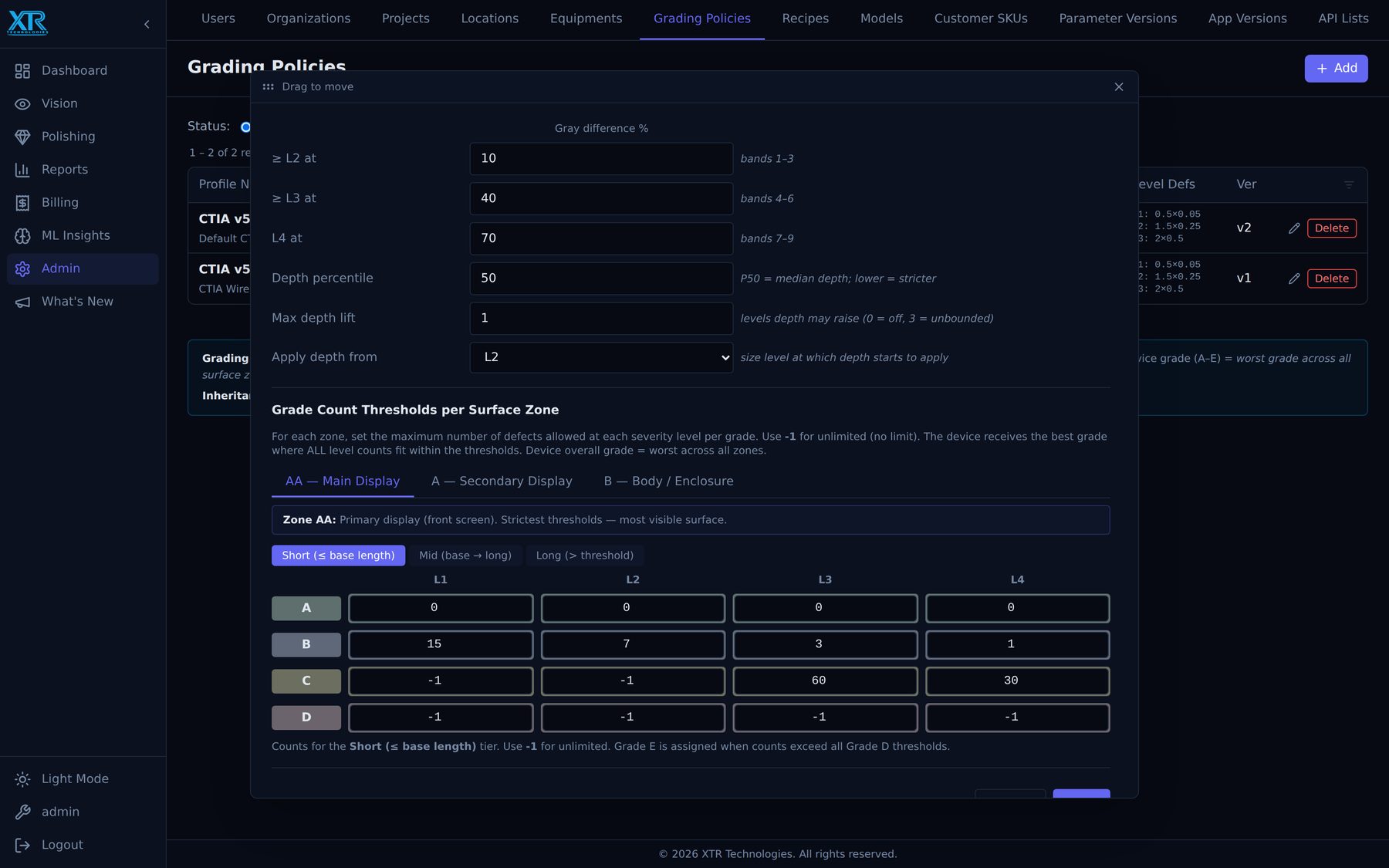
Grading is measured against named, versioned policies built on the CTIA standard. Each customer or market can have its own policy. Because the defect data is stored, any device can be re-graded to a new specification without being scanned again.
Per-market grading policies04 · The system
Hardware, intelligence and workflow built as one closed loop — so the record is what happened, not what someone remembered to type.
01 · Vision triage
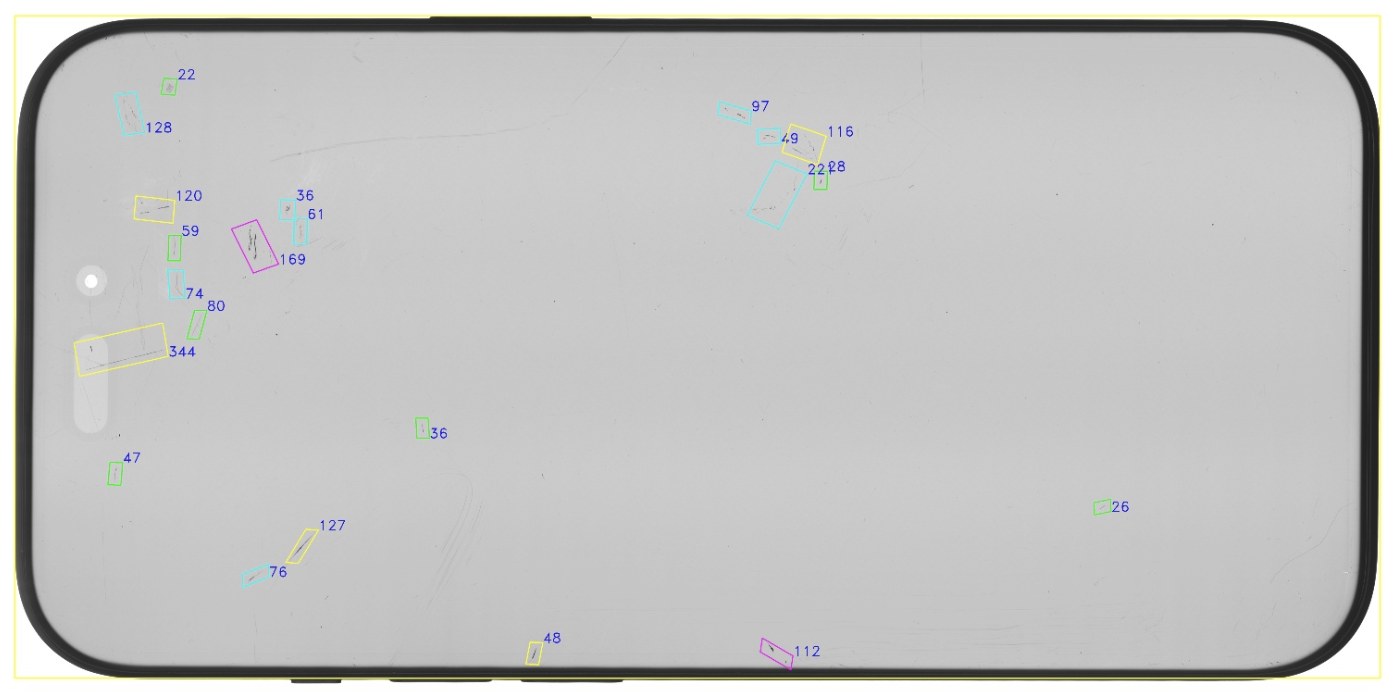
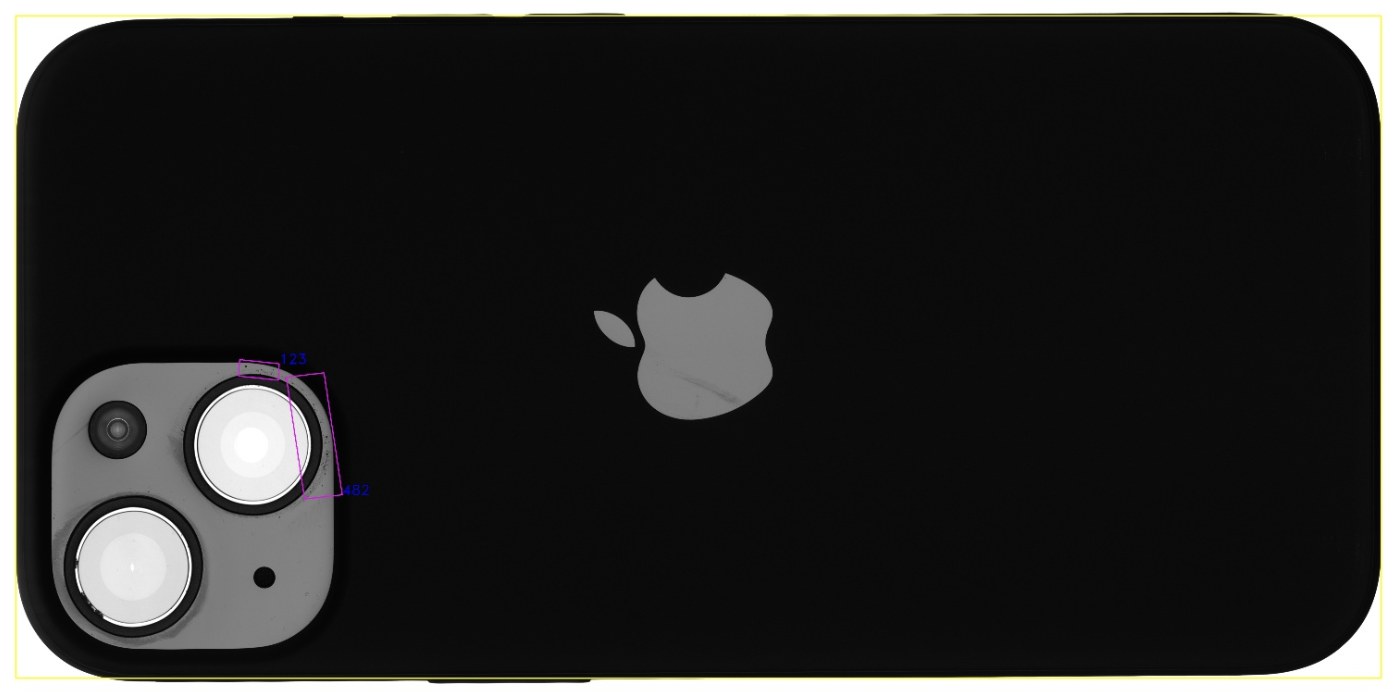




Actual captures of one grade 3 unit. The front is graded on its own against zone AA: 22 scratches, grade 3. The back and all four sides are counted together against zone B: 2 scratches, grade 2.
02 · Decision assist
A gradient-boosted model scores every scratch individually — length, width, area, angle, ten depth bands and distance to the panel edge — and returns the probability that buffing clears it. It's retrained on production data, because every polished device becomes a labelled example.
03 · Buff, polish & AF-coat
04 · Final vision
Final vision is the second half of the experiment. Every polished unit carries a before grade and an after grade, so yield is observed, not asserted — and downgrades are reported as loudly as upgrades.
Because the same scratch is measured before and after, the line generates its own labelled data. No annotation, no manual review — every polished device trains the next decision.
05 · Equipment
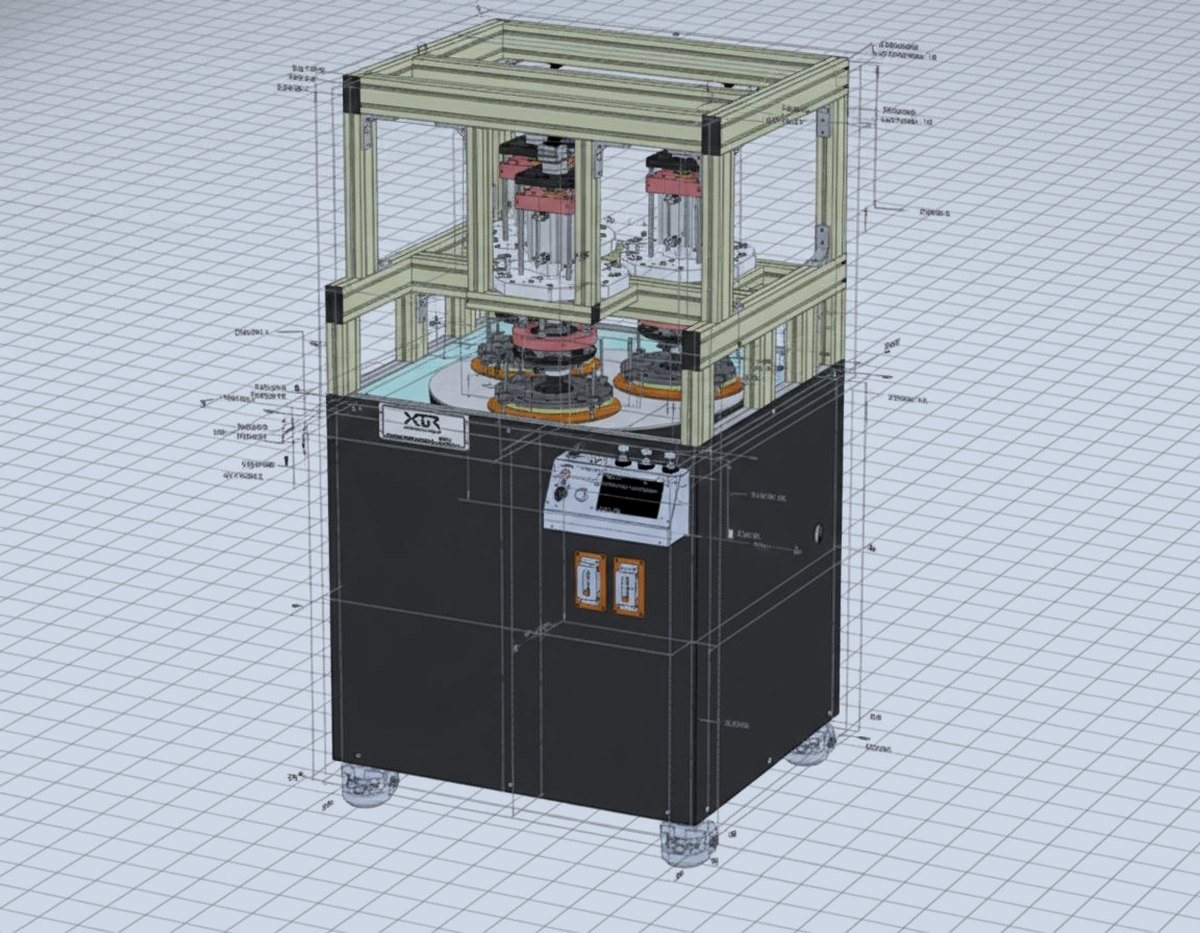
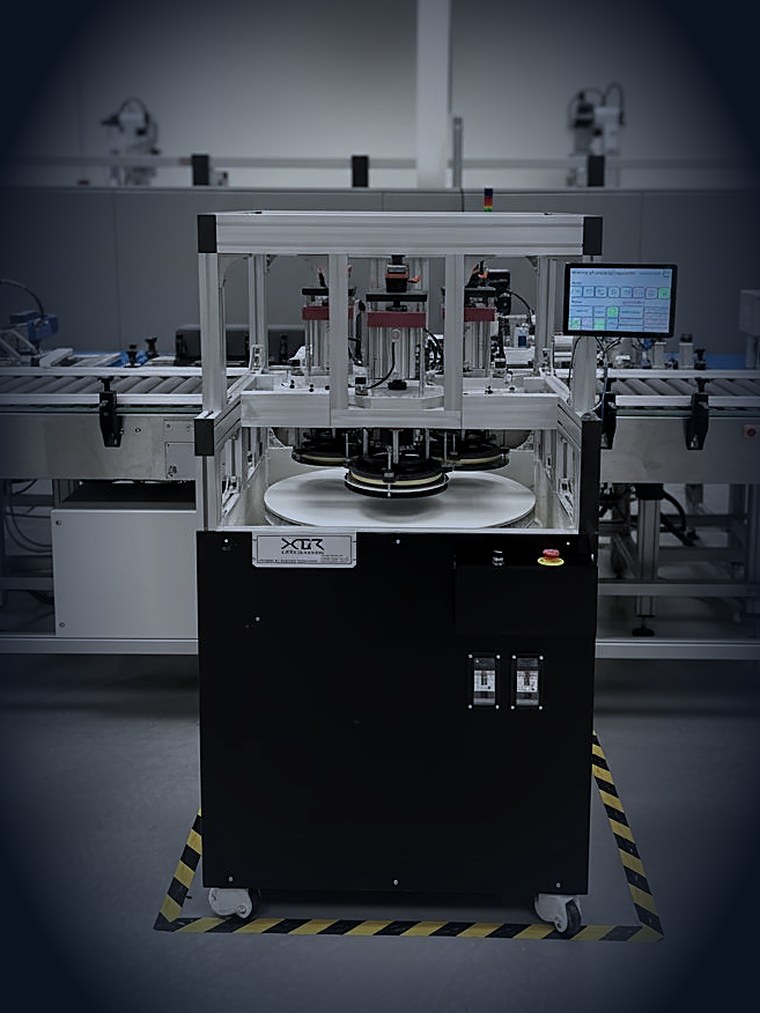
Polishing takes the factory's anti-fingerprint layer off along with the scratches. Putting it back on a fully assembled phone is beyond conventional vacuum coating — so XTR built the line that can. Owning the machine is why the software can read it rather than guess at it.
 US patented
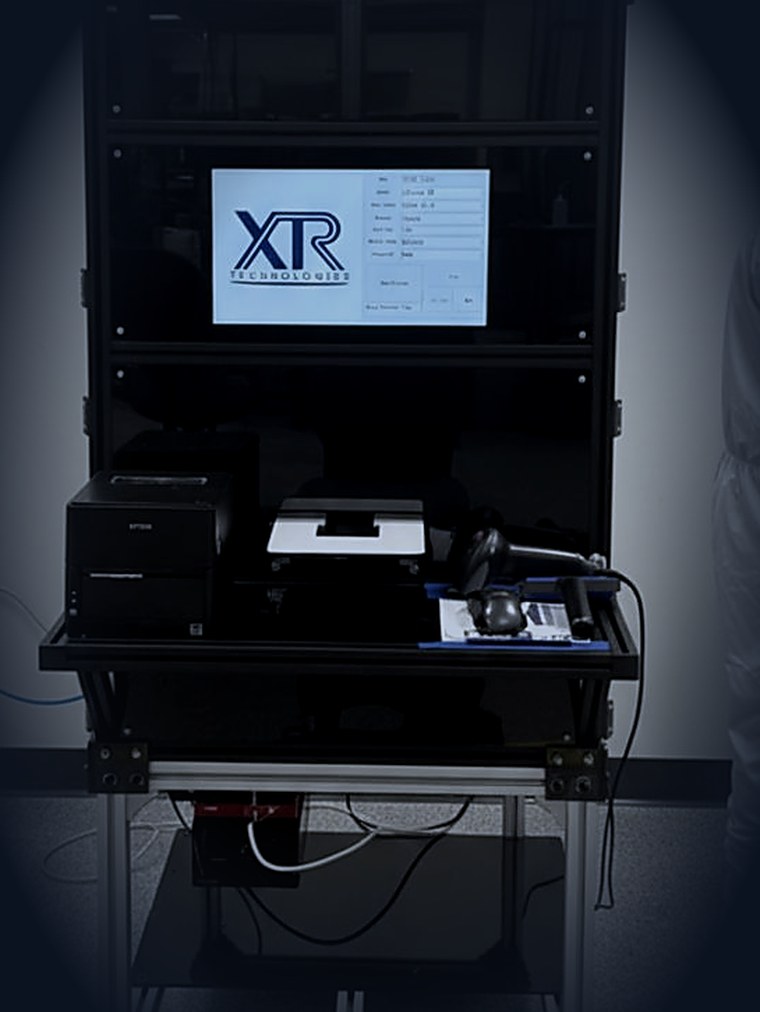
Restore · 01
Automated CMP with three heads, adjustable parameters and recorded pressure and process time per device.
 XTR built
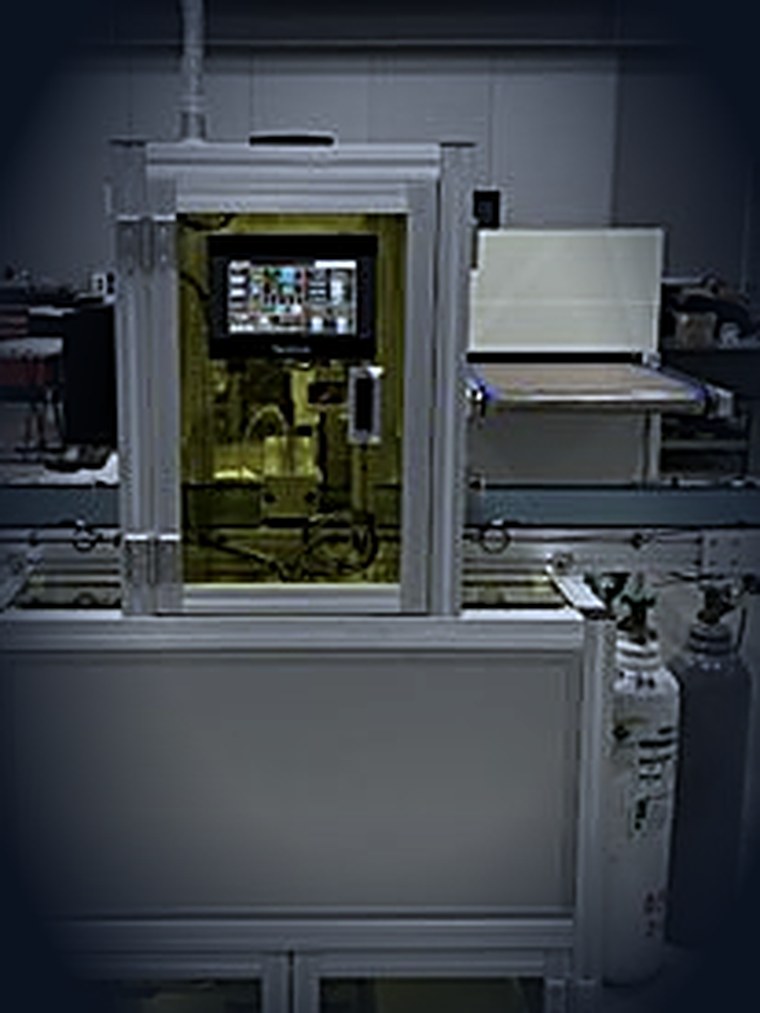
Inspect · 02
Six-side imaging with deep-learning defect detection, cosmetic grading and polishability scoring.
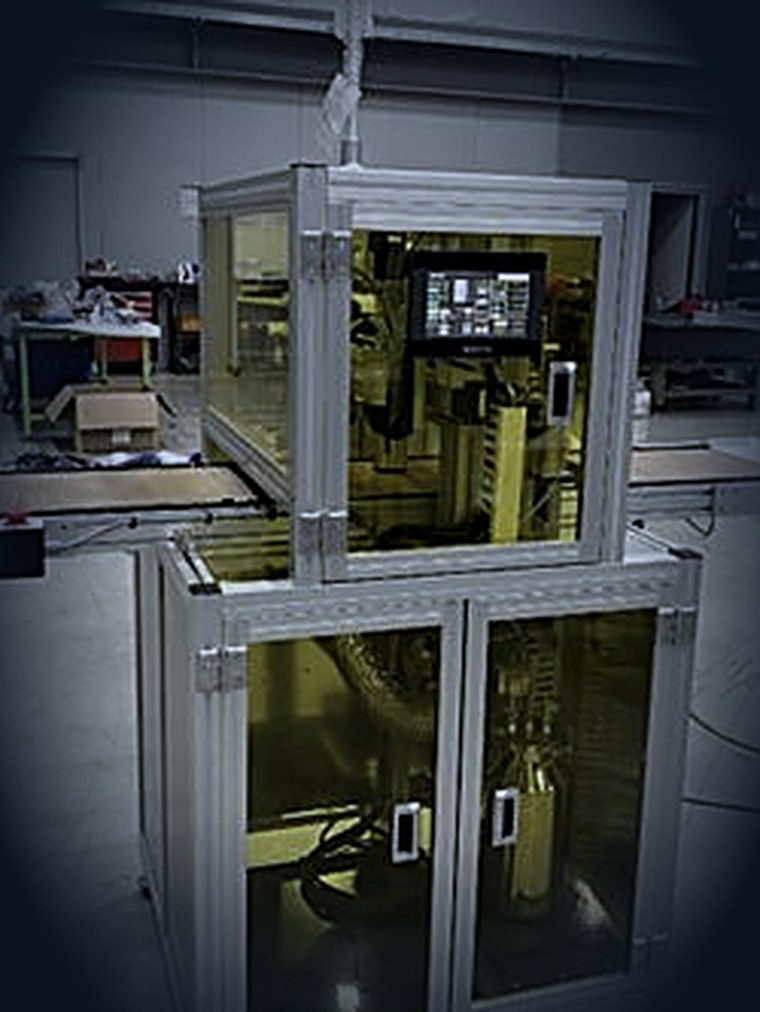
Prepare · 03
Low-temperature surface cleaning and activation — adhesion without thermal damage.
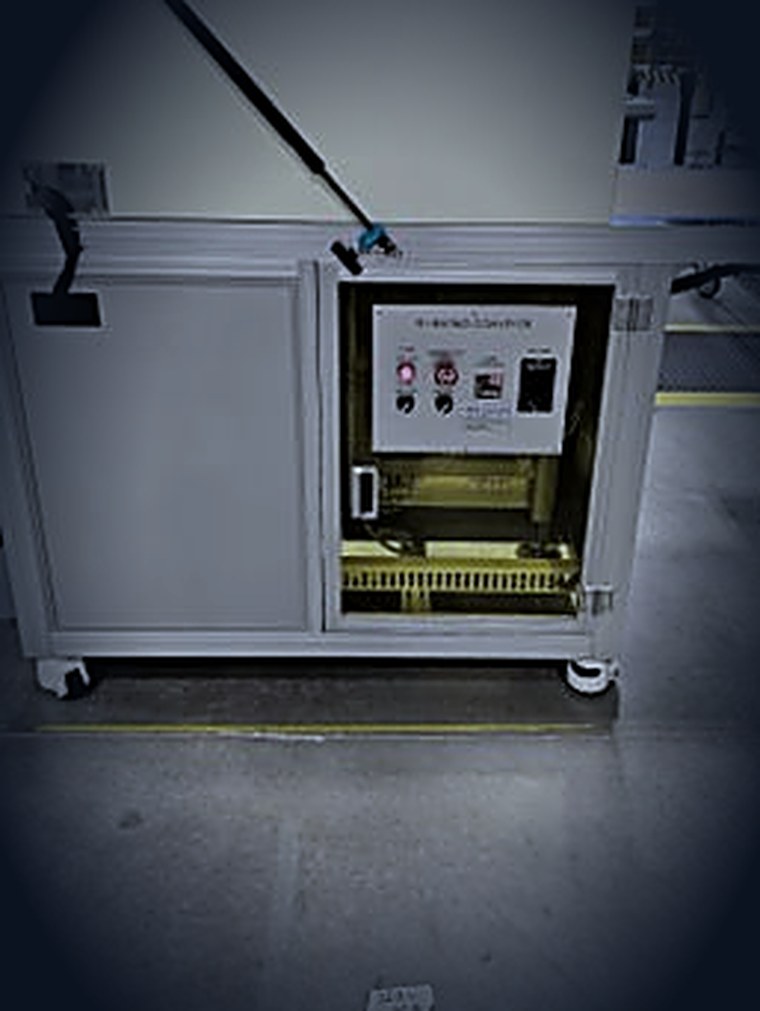
Coat · 04
Liquid-phase anti-fingerprint film applied directly to the assembled device.
 Made in USA
Cure · 05
Precision thermal curing for an OEM-level, covalently bonded finish.
XTR AF-Coating Line — the integrated, turnkey system: plasma, spray and cure in one flow.
Discuss a line06 · Shopfloor platform
XTR Shopfloor is the software the whole line reports into. Every device is an IMEI walking a state machine: no stage can be skipped, every move writes an immutable transaction, and the machines post their own results.
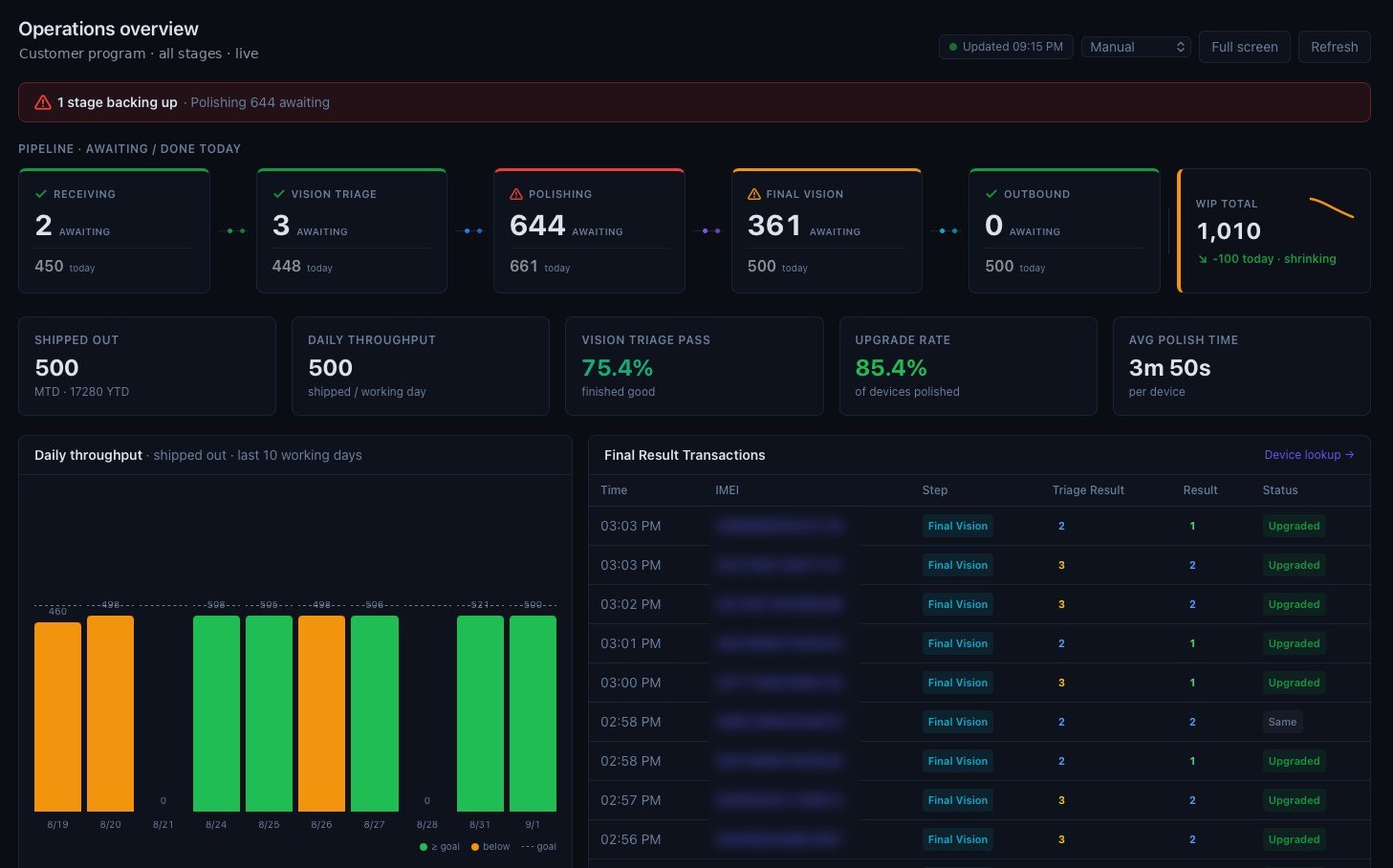
Customer name and device IMEIs masked.
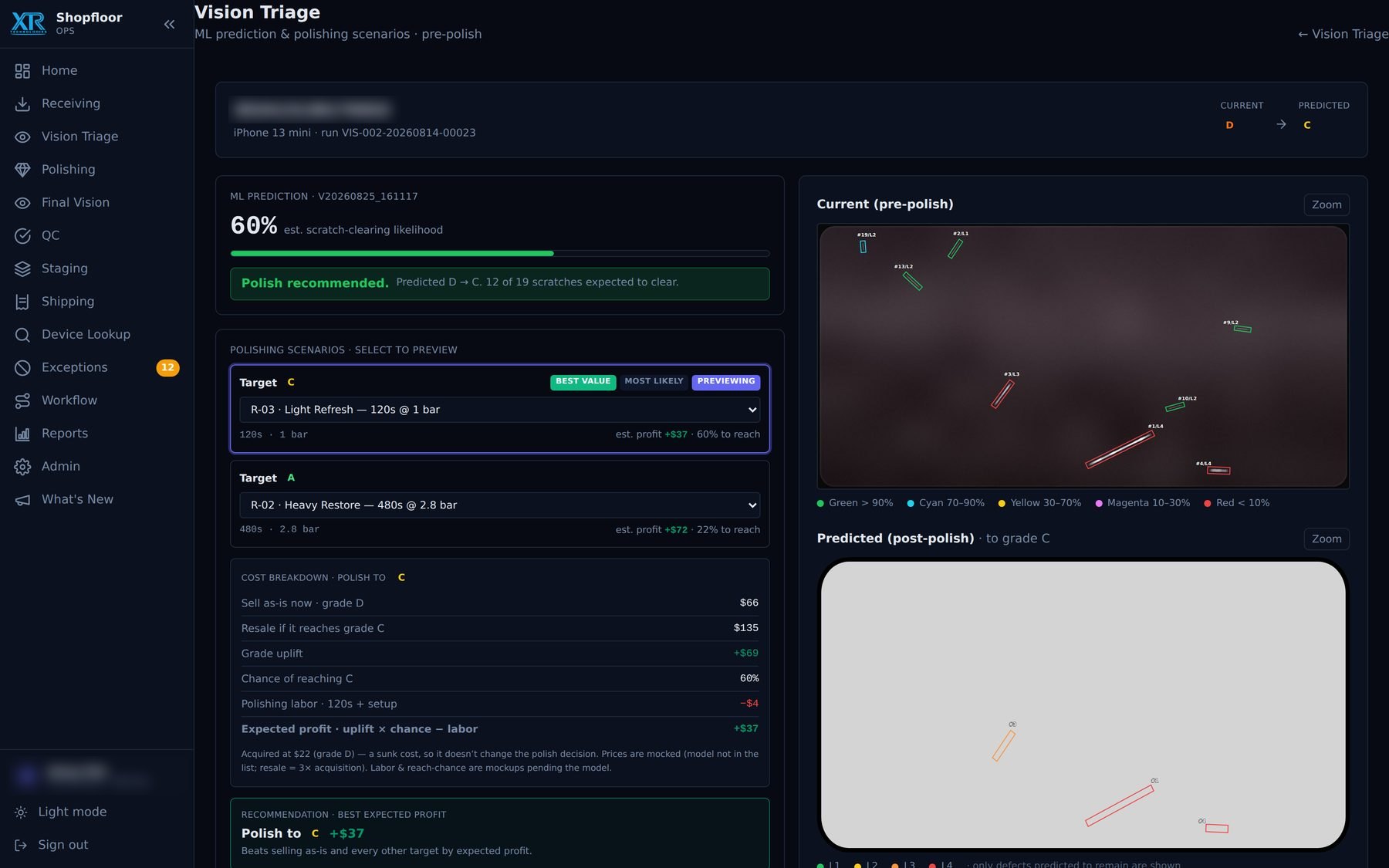
Device IMEI and operator name masked. Prices on this screen are sample values.
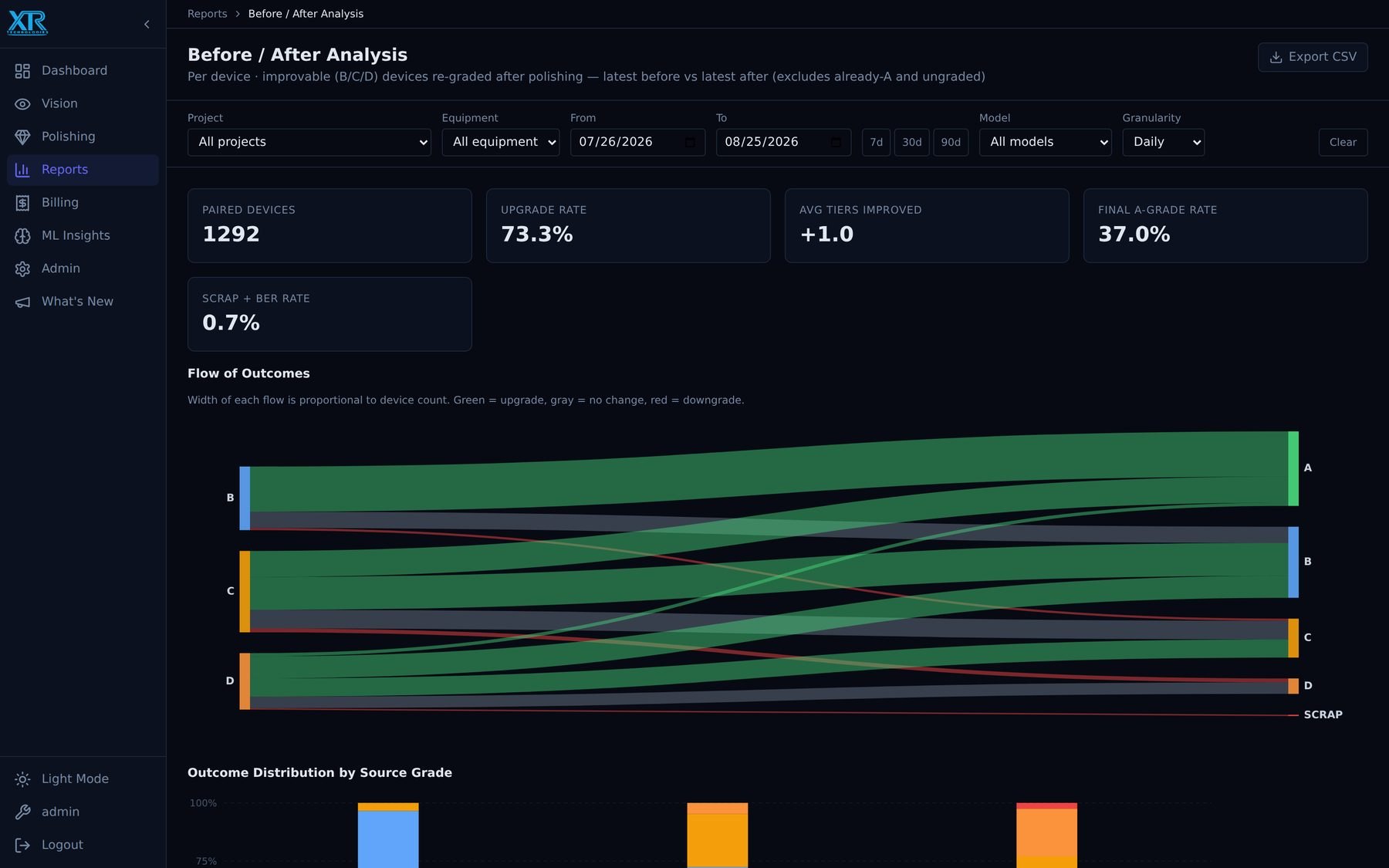
Report shown across all projects for one 30-day window.
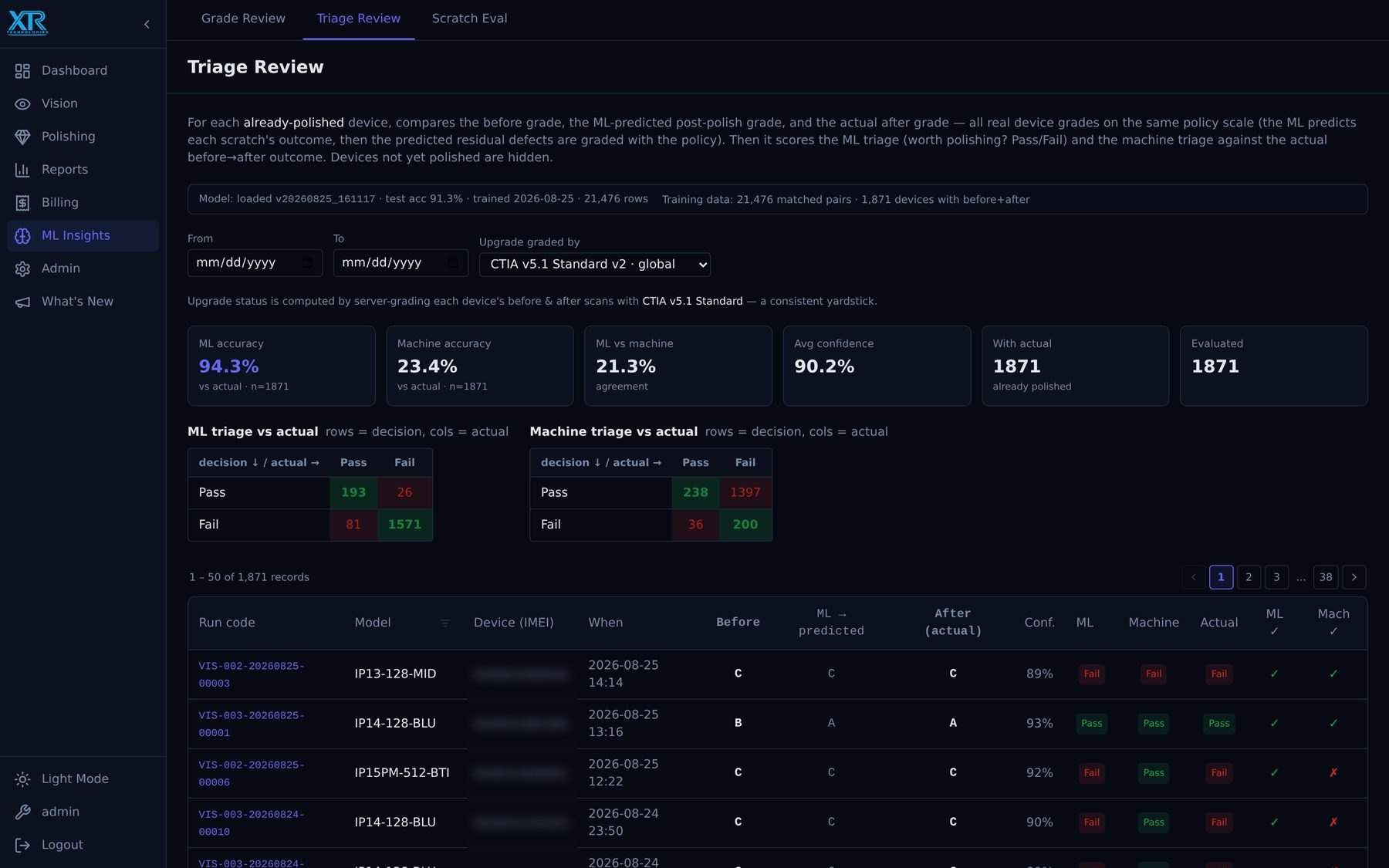
Device IMEIs masked.
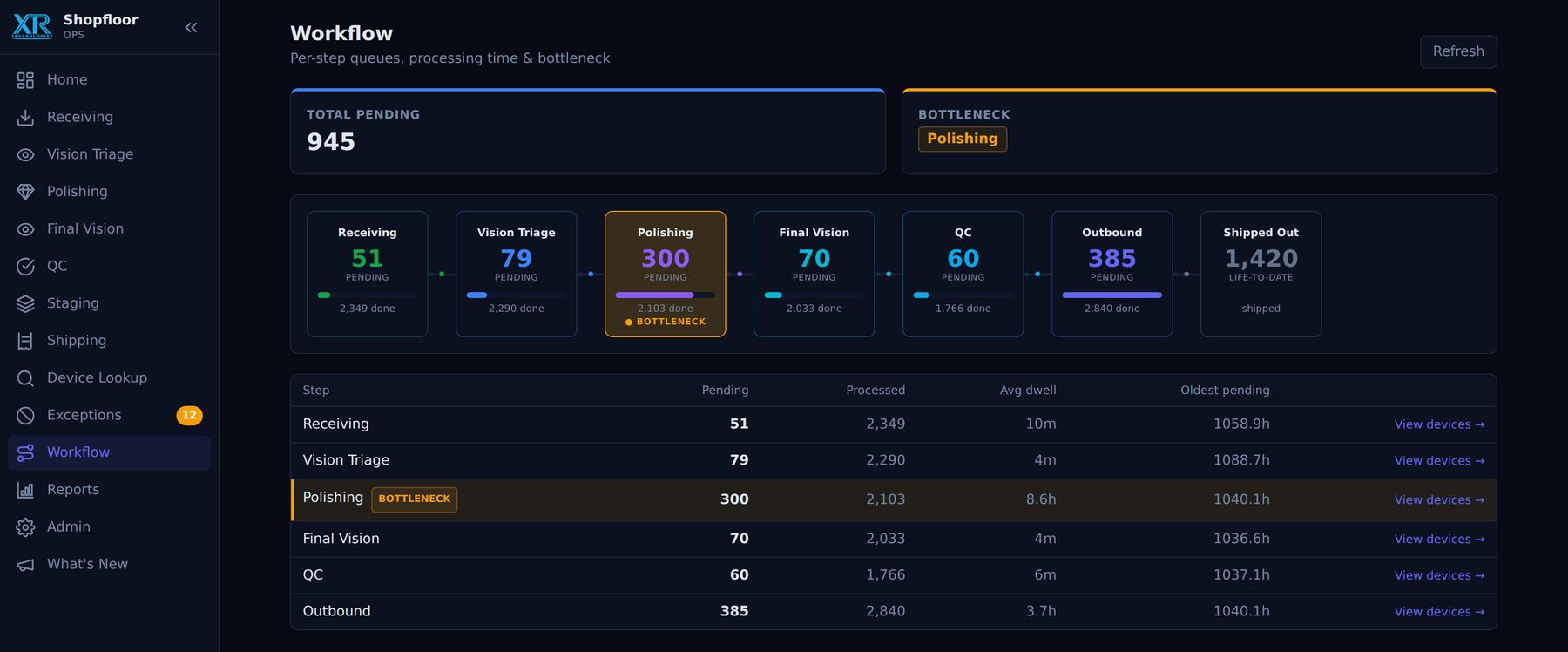
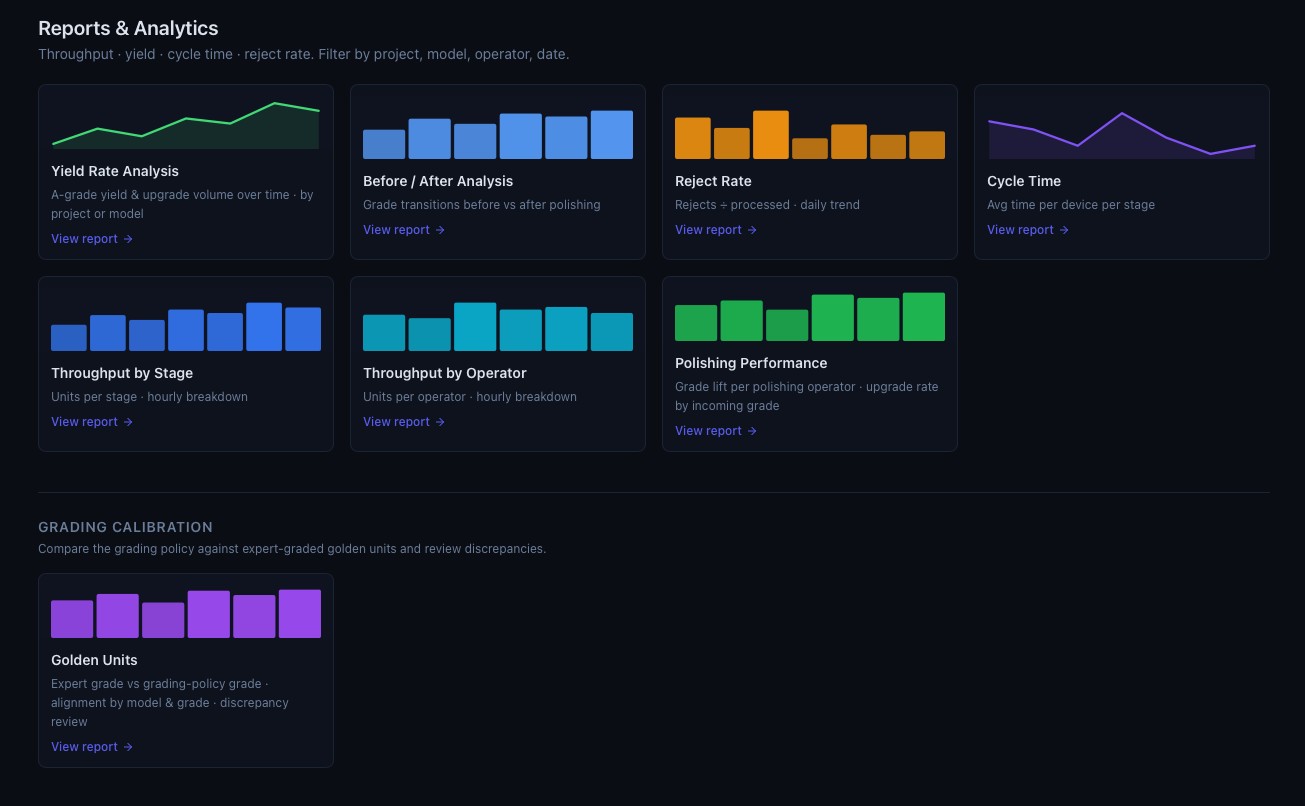
Out-of-sequence moves are refused; a supervisor override needs a written reason.
No rework or scrap decision is recordable without a base code.
A polishing badge cannot record a QC decision. Every action carries an operator.
Customers log in to the same data, scoped to their organisation, with cost per device.
07 · Company
XTR was founded in 2012 inside an OEM repair center, developing the polishing and cover-glass processes that became its patented technology. Today it serves carriers, insurers and refurbishers running certified pre-owned programmes.
Founded inside an OEM repair center; polishing and cover-glass processes developed.
Polishing for OEM modules introduced.
Curved OLED lamination developed.
Korean patent awarded.
US patent awarded.
AI Vision and the BNP division launched.
Closed-loop restoration — vision, decision assist and shopfloor in one line.
08 · Contact
Tell us about your volume and program. We'll walk you through the line, the data it produces and what it would change for your grade mix.
Or write to info@xtrtechnologies.com